
Date : June 1, 2026
Category: Recovery & Wellness
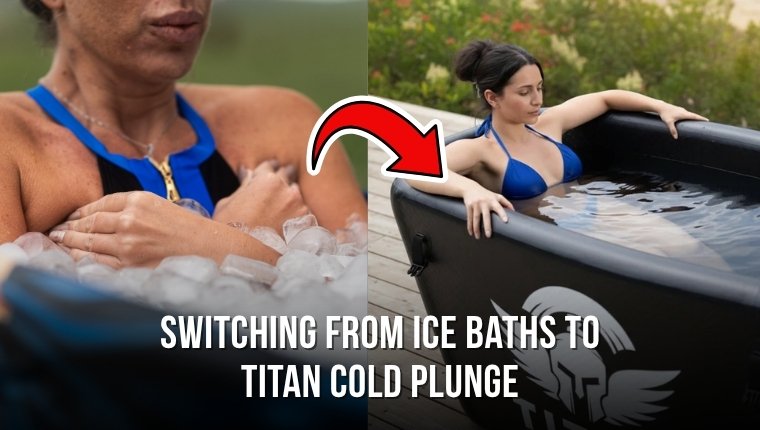
Switching From Ice Baths to Titan Cold Plunge: A Real Before and After
Most people who switch from ice baths to a cold plunge do not do it because ice baths stopped working. They do it because the process became unsustainable. Sourcing ice. Storing it. Hauling bags before each session. Watching the temperature climb from 45°F to 55°F by minute four because the ice melted faster than expected. For someone who cold plunges
Most people who switch from ice baths to a cold plunge do not do it because ice baths stopped working. They do it because the process became unsustainable. Sourcing ice. Storing it. Hauling bags before each session. Watching the temperature climb from 45°F to 55°F by minute four because the ice melted faster than expected.
For someone who cold plunges once or twice a week, that process is manageable. For someone doing it daily, it becomes a real barrier. And barriers, over time, kill habits.
This breakdown looks at what switching from ice bath to cold plunge actually changes, based on verified buyer accounts from people who made the switch to Titan Cold Plunge and reported back.
Ice Bath vs Titan Cold Plunge: Why Committed Users Start Looking for Alternatives
Ice baths work. That is not the question. Cold water immersion produces real physiological responses regardless of whether it comes from a bag of ice or a chiller-powered tub. The research supports the practice. But the question is whether the method holds up when the habit becomes daily. That is where ice baths start to show their limits.
Ice bath temperature consistency is the first problem. A session that starts at 45°F can drift to 55°F or higher as the ice melts. At occasional use, that range is acceptable. At daily use, it becomes unpredictable enough to affect the experience session to session.
The second problem is cost. At five sessions per week using 10 to 20 lbs of ice per session, the monthly spend on ice alone runs between $40 and $120 depending on location and supply. That number adds up without producing any cumulative benefit from the spending itself.
The third problem is time. Setup for a traditional ice bath takes 20 to 30 minutes per session. For a daily user, that is a meaningful chunk of the morning before the session even begins.
These are not dealbreakers for everyone. But for users who have moved beyond testing and are treating cold therapy as a daily practice, they are the exact friction points that trigger the search for a cold therapy ice bath alternative.
Is Cold Plunge Better Than Ice Bath? 4 Factors That Tell the Real Story
The titan cold plunge vs. ice bath comparison is not about which method produces better cold therapy. Both expose the body to the same temperatures and trigger the same physiological responses. What changes is everything around the session itself.
| Factor | Ice Bath | Titan Cold Plunge |
| Temperature | Drops as ice melts. Inconsistent mid-session. | Holds at 37°F from first second to last. |
| Monthly Cost | $40 to $120+ depending on frequency and location. | ~$0.50/day electricity. Recovers cost vs ice in 3 to 4 months. |
| Prep Time | 20 to 30 minutes per session setup. | Zero prep. Water always at temperature. |
| Water Hygiene | No filtration. Bacteria from skin and sweat in standing water. | 20-micron filter + UV sanitation. Continuous circulation. |
Temperature Control
With ice, the session temperature is a variable. It depends on how much ice was used, how warm the water started, and how long the session runs. Ice bath temperature consistency breaks down quickly at daily use frequency.
The Titan chiller holds water at exactly 37°F continuously. The temperature on day one is the same as the temperature on day 180. That consistency is what multiple long-term users describe as the core difference after switching.
Cost Over Time
The cold plunge chiller vs. ice cost comparison changes significantly at daily use frequency. Titan’s published cost data puts electricity use at approximately $0.50 per day for the chiller. At five sessions per week, the chiller cost recovers against ongoing ice spending in three to four months.
Whether a cold plunge chiller is worth it over ice is a question that resolves itself by month four for most consistent users. After that point, the ice would have cost more in total.
Prep Time
Titan cold plunge daily use vs. ice bath prep is where the practical difference is most immediate. Ice bath setup takes 20 to 30 minutes per session. The Titan system requires no prep at all.
The water is already at temperature when the user walks up to it. The session starts immediately. That time saving compounds across hundreds of sessions.
Water Hygiene
Ice does not circulate through filtration. Each session introduces bacteria from skin, sweat, and handling into standing water. The Titan system runs water through a 20-micron filtration and UV sanitation system between every session. Water stays clean without manual intervention.
Titan Cold Plunge Before and After: What Three Real Switchers Actually Noticed
Three verified Trustpilot reviewers for titan-wellness.com describe making the switch from a previous cold therapy setup to Titan. Their accounts cover the specific changes they noticed after switching.
Cari T
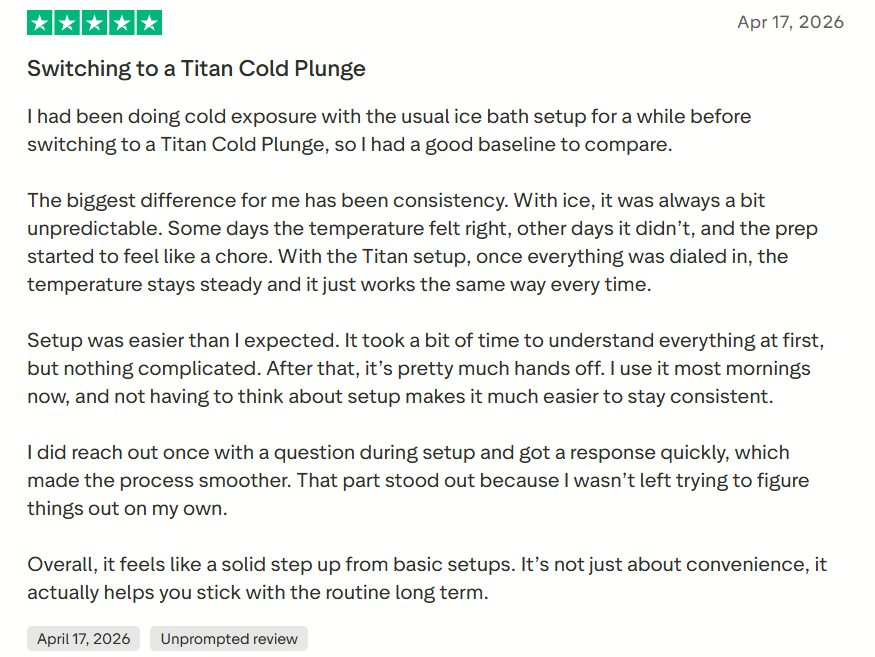
Cari T switched from a traditional ice bath to the Titan setup. The shift she describes is not about results. It is about consistency. With ice baths, she would occasionally skip sessions because of the prep involved. With Titan, the water is already at temperature. The session happens.
She notes that her mornings feel noticeably different since making the switch. She credits consistency for that change, not the product itself. The product made the consistency possible.
Brian Haffeman
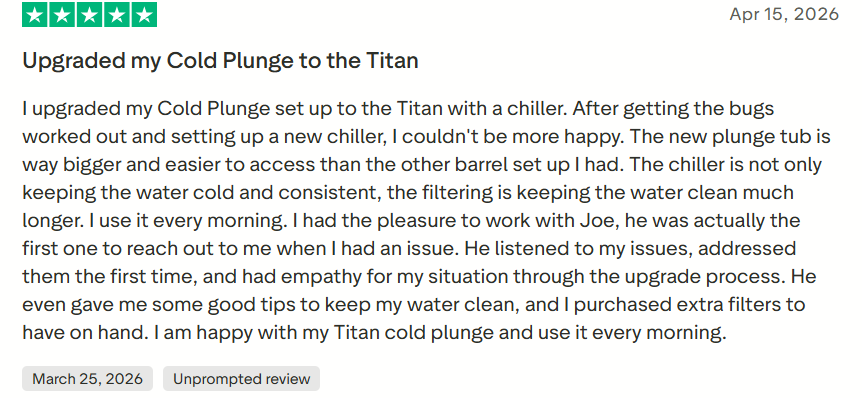
Brian Haffeman upgraded from a barrel cold plunge setup to the Titan system. He uses it every morning. The shift he describes is the same as Cari T’s: not having to prepare anything.
Before the switch, his barrel setup required manual temperature management and more frequent water changes. After switching, the filtration keeps the water clean for longer. The maintenance load is lower, not higher.
What consistent daily use looks like after the switch is covered in more detail in the six-month long-term review from verified buyers.
What Does Not Change When You Switch
The cold itself does not change. 37°F is 37°F regardless of whether it comes from a bag of ice or a chiller unit. The mental challenge of getting in does not get easier because the system is more convenient. Commitment and consistency still come from the user, not the equipment.
A full look at what users find positive and where the system has real limitations is covered in the Titan Cold Plunge pros and cons breakdown.
For occasional users, the case for switching is weaker. The cost and logistics of ice are manageable at low frequency. The setup friction does not compound at one or two sessions per week the way it does at daily use.
When Switching From Ice Bath to Cold Plunge Makes Sense
The accounts from Cari T, Brian Haffeman, and Dave Lindemulder point in a consistent direction. The switch made sense for each of them because cold therapy was already a committed daily practice, not an occasional experiment.
Switching makes more sense when:
- Daily or near-daily sessions are already the goal
- Ice prep is a real logistical friction point
- Temperature consistency matters for the quality of each session
- Long-term cost reduction is a factor in the decision
Staying with ice baths makes more sense when:
- Still testing whether cold therapy fits the routine
- Sessions are weekly, not daily
- Budget at the time of purchase is the main constraint
For buyers who are already past the testing phase, the value question looks different at six months of consistent use than it does at the point of purchase.
The before and after from verified switchers suggests the same pattern across all three accounts. Less friction. More consistency. The same cold. A different experience around it.
The Switch Is Not About the Equipment
Ice baths work. That was never the question.
The question is whether the method holds up when cold therapy becomes a daily practice. For most committed users, the friction of sourcing ice, managing temperature, and spending 20 to 30 minutes on prep is what eventually breaks the habit.
The accounts from Cari T. and Brian Haffeman describe the same shift after switching. Less preparation. More consistency. The cold stayed exactly the same.
For buyers who are already past the testing phase, the case for switching is straightforward. The Titan Cold Plunge does not change what cold therapy is. It changes whether it actually happens every day.
Frequently Asked Questions
Is Buying a Titan Cold Plunge Cheaper Than Buying Ice Long-Term?
Yes, and the math is straightforward. A daily ice bath needs 20 to 40 lbs of ice per session, which costs around $10 a day. At five sessions per week that adds up to $200 to $300 a month on ice alone. Titan’s chiller costs roughly 50 cents to one dollar per day to run, paying for itself within three to four months of regular use.
Titan Cold Plunge vs Ice Bath: What Is the Real Temperature Difference?
The gap is not just in degrees. It is in consistency. An ice bath starts cold but warms up as ice melts and body heat transfers to the water. Within 10 to 15 minutes, the temperature can rise significantly. The Titan chiller continuously pulls and recools the water, locking it at the set temperature from start to finish, whether that is 37 or 42 degrees Fahrenheit.
How Much Prep Time Does a Titan Cold Plunge Save Compared to an Ice Bath?
A traditional ice bath means driving to the store, buying ice, hauling it home, dumping it in, and waiting for the water to cool. That process easily takes 30 to 45 minutes before a single session. With Titan, the chiller runs continuously and keeps the water at the set temperature around the clock. Prep time is essentially zero.
Do You Have to Change the Water After Every Session?
Not with Titan. A basic ice bath has no filtration, so the water becomes unsafe after one or two uses and needs draining and scrubbing each time. The Titan system includes a 20-micron filtration system and optional ozone purification that keeps the water clean for weeks. Most single users go three to six weeks between full water changes.
Does the Titan Chiller Stay Efficient After Months of Continuous Use?
Yes. Long-term users in hot climates report that running the chiller continuously is actually more efficient than switching it on and off before each session. Keeping it at a baseline temperature like 38 to 46 degrees Fahrenheit around the clock uses less energy than repeatedly cooling warm water from scratch before every plunge.
How Much Does a Titan Cold Plunge Add to the Monthly Electricity Bill?
Very little. Community data from long-term owners shows the average monthly electricity increase runs between 10 and 30 dollars depending on regional rates and how well the setup is insulated. For users who were previously spending 200 to 300 dollars a month on ice, the operational cost is a significant step down.
Does the Cold Shock Get Easier After Months of Daily Use?
Yes, and noticeably so. Long-term user accounts show the body recalibrates within the first few weeks of consistent plunging. What starts as a difficult daily challenge gradually becomes an automatic part of the morning routine, similar to any other ingrained habit. The entry never becomes completely comfortable, but it stops feeling like a battle.
RECENT BLOGS
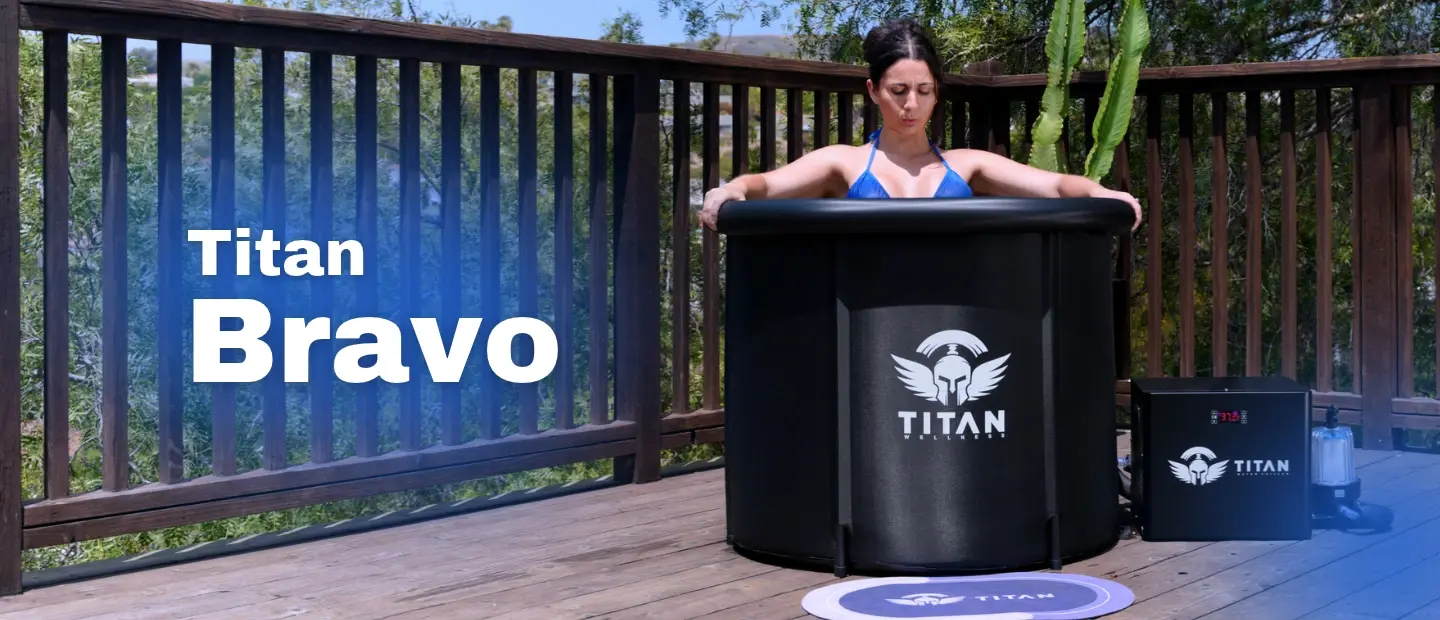
Titan Bravo Review: The Budget Pick Tested by Real Owners
Sep. 18, 2026
Titan Cold Plunge Chiller WiFi App Walkthrough: Every Feature Explained
Sep. 09, 2026Titan Cold Plunge After 1 Year: What Long-Term Owners Actually Report
Aug. 14, 2026
Titan Sauna Duo-Therapy Pro Review: What Buyers Actually Say
Aug. 13, 2026
Titan 1/2 HP Universal Cold Plunge Chiller: What Buyers Say About the Most Popular Chiller
Aug. 04, 2026Recent Blogs
Titan Bravo Review: The Budget Pick Tested by Real Owners
The Titan Bravo is Titan Wellness’s entry-level cold plunge system: a 106-gallon inflatable cold plunge tub paired with a 1/3…
September 18, 2026
Read More
Titan Cold Plunge Chiller WiFi App Walkthrough: Every Feature Explained
The Titan Wellness cold plunge chiller WiFi app puts water temperature, session scheduling, and remote monitoring in one place, right…
September 9, 2026
Read More
Titan Cold Plunge After 1 Year: What Long-Term Owners Actually Report
Most Titan Cold Plunge owners who have used the system daily for a year say the chiller still holds its…
August 14, 2026
Read More
Titan Sauna Duo-Therapy Pro Review: What Buyers Actually Say
Buyers keep asking the same question: Is the Titan Sauna Duo-Therapy Pro worth $649? So, for most home users, the…
August 13, 2026
Read More
Titan 1/2 HP Universal Cold Plunge Chiller: What Buyers Say About the Most Popular Chiller
The chiller is the part of a cold plunge system that decides whether the tub actually gets used. Not the…
August 4, 2026
Read More
Titan 1/3 HP Standard Chiller Review: What Buyers in Mild Climates Report
The chiller decides how a cold plunge system actually performs day to day. Not the tub. Not the accessories. The…
August 3, 2026
Read More